
Fast assessment and treatment for eye injuries, from scratches and foreign bodies to blunt trauma and eyelid cuts.
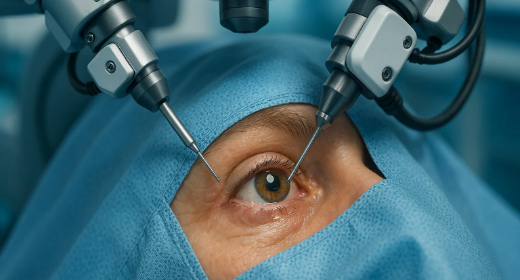
Eye injuries can happen at work, at home, on the road or during sport. They range from minor scratches to serious damage inside the eye.
Common injuries include scratches on the cornea, dust or metal particles stuck in the eye, chemical splashes, blows to the eye and cuts to the eyelid.
Even injuries that seem minor can lead to infection or loss of vision if they are not treated properly, so prompt assessment is important.
At a glance
After an eye injury, seek care if you have:
Ongoing pain or tears after the injury.
Any drop in vision needs urgent care.
Blood in the white of the eye or behind the cornea.
Bright light is painful.
A feeling of a particle that will not wash out.
Cuts on or near the eyelid margin.
Seek care the same day for any eye injury with pain, blurred vision, bleeding, a cut, or a feeling that something is stuck in the eye.
For chemical splashes, rinse first. Rinse the eye with plenty of clean water for at least 15 minutes, then seek care immediately.
Seek urgent care if
 Specialist Ophthalmologist
Dr. Mohammed Anwar Ahmed
Meet the team
Injured eyes are seen quickly.
Safe removal of particles under the microscope.
Repair of eyelid and eye injuries when needed.
Ophthalmologists experienced in eye injuries.
We check your vision and ask how the injury happened.
A microscope examination finds scratches, particles and damage.
Removal of particles, drops, patching or surgical repair.
Reviews make sure the eye heals without infection.
Use drops or ointment exactly as prescribed.
Most scratches heal within a few days.
Reviews continue until the eye has fully healed.
Protective eyewear lowers the risk of future injuries.
Do
Avoid
You can gently rinse with clean water, but do not try to pick out stuck particles. Let a doctor remove them safely.
Most scratches heal quickly with treatment, but they can become infected, so they should be checked.
Rinse the eye with plenty of clean water for at least 15 minutes, then seek care immediately.
Wear safety glasses for grinding, drilling, gardening and some sports, and keep chemicals away from children.
Contact us or come to the centre for prompt assessment and treatment.
Sunday to Friday · 9 am – 1 pm, 4 pm – 9 pm