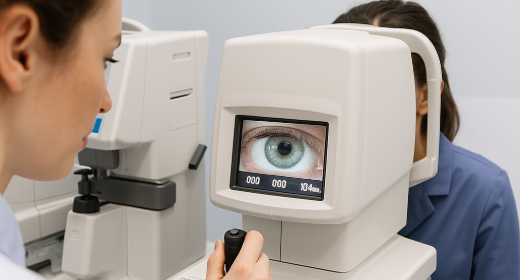
Optical Coherence Tomography (OCT)
OCT produces detailed cross-sectional images of structures inside the eye, particularly the retina. It can help clinicians assess and monitor certain retinal conditions.
Accurate eye examinations help eye-care professionals assess vision, examine eye structures and investigate different eye conditions.
Majan Eye Centre in Barka, Oman, has a range of ophthalmic equipment supporting eye examinations, diagnostic assessment and selected treatment procedures. Our technology helps clinicians evaluate patients’ eye health and determine appropriate care based on individual needs.
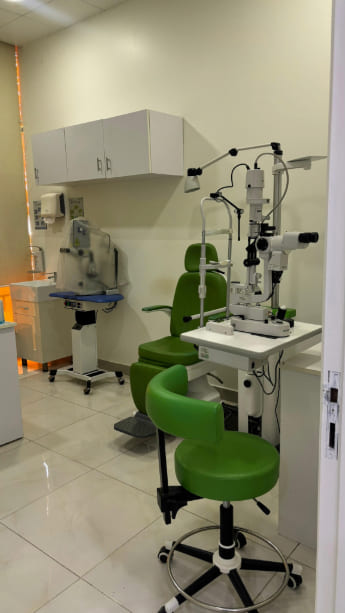
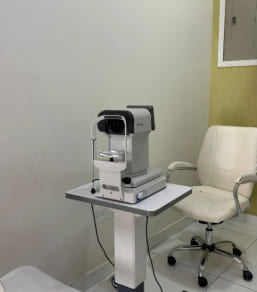
Eye-care technology supports the examination of different structures and functions of the eye. Depending on the patient’s symptoms and clinical requirements, an examination may involve retinal imaging, eye pressure measurement, corneal assessment or specialised tests of eye movement and vision.
At Majan Eye Centre, our available equipment supports different aspects of ophthalmic assessment.
OCT produces detailed cross-sectional images of structures inside the eye, particularly the retina. It can help clinicians assess and monitor certain retinal conditions.
This imaging technique uses a fluorescent dye and specialised photography to examine blood flow in retinal blood vessels when clinically indicated.
An instrument used to examine the retina and other structures at the back of the eye.
Slit lamps provide magnified examination of the front structures of the eye, including the cornea, iris and lens.
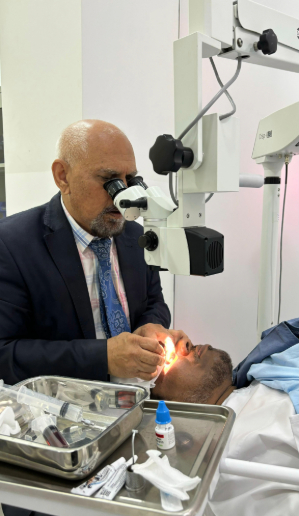
A microscope used in ophthalmic examination or procedures, depending on its specific configuration and clinical application.
B-scan ultrasound: Produces images of internal eye structures and may be useful when the retina or other structures cannot be clearly viewed directly.
A-scan ultrasound: Measures distances within the eye and can support certain ophthalmic measurements, including those used in cataract surgery planning.
Measures eye pressure using a non-contact method.
Measures intraocular pressure using an applanation technique. Eye pressure measurement may form part of a glaucoma assessment.
Tests the visual field to identify areas of reduced peripheral or central vision. It may be used when assessing and monitoring conditions such as glaucoma.
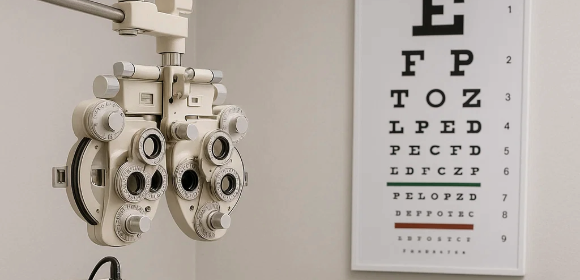
Measures refractive error and estimates the curvature of the cornea to support vision assessment.
Measures corneal thickness, which can be relevant to certain eye assessments, including glaucoma evaluation and refractive surgery screening.
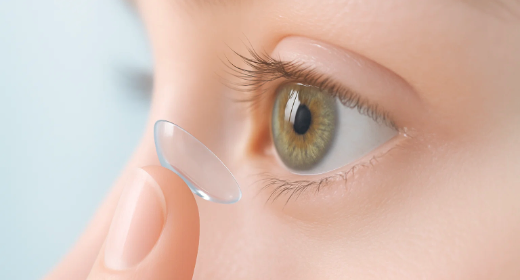
Maps the shape and curvature of the cornea. Corneal topography can support the evaluation of selected corneal conditions and refractive surgery suitability.
Measures the optical power of spectacle lenses, helping assess existing glasses prescriptions.
Helps clinicians estimate refractive error during an eye examination.
An instrument used to assess eye alignment, binocular vision and certain aspects of how the eyes work together. It may support the assessment of squint and related conditions.
Green laser systems can be used for selected retinal treatments when clinically indicated.
A YAG laser is used for specific ophthalmic procedures, depending on the diagnosis and clinical indication.
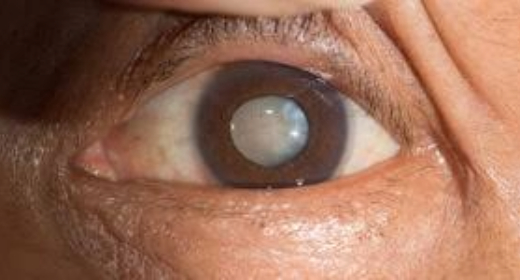
A phacoemulsification system used in cataract surgery. It supports the removal of a cataract through a specialised surgical technique.
LASIK is a type of refractive surgery used to correct certain vision problems. Patients should undergo a suitability assessment before considering the procedure.
The equipment available at Majan Eye Centre supports different aspects of eye assessment and treatment planning.
The equipment used depends on the patient’s symptoms, examination findings and the clinician’s recommendations. Not every patient requires every test.
Our equipment supports:
Our diagnostic and treatment equipment may support several areas of ophthalmology, depending on clinical requirements.
Eye assessment and measurements used in cataract care.
Eye pressure measurement and visual field assessment.
Retinal examination and imaging.
Assessment of corneal shape and thickness.
Selected assessments of children’s vision and eye alignment.
Evaluation of refractive error and corneal suitability.
Technology is an important part of eye care, but diagnostic results must be interpreted alongside a patient’s symptoms, medical history and clinical examination.
The eye-care professional determines which tests are appropriate and explains the findings and recommended next steps.
If you are experiencing changes in vision or have concerns about your eye health, contact Majan Eye Centre to enquire about an appropriate eye examination.
The centre’s listed equipment includes OCT, eye ultrasound, slit lamps, tonometers, a Humphrey perimeter, corneal assessment equipment, lasers and cataract surgery technology.
OCT produces detailed images of structures inside the eye, particularly the retina. It can help assess and monitor certain eye conditions.
A computerized non-contact tonometer and an applanation tonometer can measure intraocular pressure. The appropriate method depends on the clinical assessment.
Corneal topography maps the curvature and shape of the cornea. It may be used when evaluating certain corneal conditions and assessing suitability for refractive surgery.
The Alcon Centurion phaco machine is listed among the centre’s available technologies and is used in phacoemulsification cataract surgery.
No. The tests recommended depend on symptoms, examination findings and the clinician’s judgement.
Book an Eye Examination
If you need an eye examination or want to learn more about the diagnostic facilities available at Majan Eye Centre, contact our team in Barka, Oman.
Sunday to Friday · 9 am – 1 pm, 4 pm – 9 pm