Children’s vision plays an important role in learning, development and everyday activities. Regular eye assessments can help identify vision problems and eye conditions that may need attention.
Majan Eye Centre in Barka, Oman, provides information about paediatric eye care and helps parents enquire about appropriate eye examinations and available services for their children.
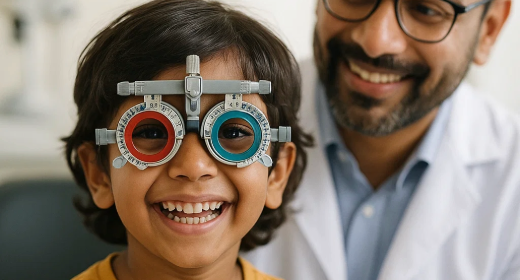
Paediatric ophthalmology is the branch of eye care focused on children’s vision and eye health, from infancy through adolescence.
Children may experience eye conditions that affect how they see, focus or use both eyes together. Some problems are not obvious, particularly in younger children who may not be able to explain their symptoms.
A paediatric eye assessment can help identify potential problems and determine whether treatment, monitoring or further specialist care is needed.
At a glance
Children may experience several types of eye and vision problems, including:
When the eyes do not point in the same direction.
Reduced vision in one eye, or occasionally both, due to abnormal visual development.
Nearsightedness, farsightedness or astigmatism that may affect clear vision.
Excessive tearing that may be associated with blocked tear drainage or other causes.
Certain eyelid abnormalities, swelling or lumps that may require assessment.
Problems affecting the eyes’ development, alignment or general health.
The appropriate assessment depends on the child’s age, symptoms and medical history.
Children should also receive age-appropriate vision screening and eye assessments as recommended by their healthcare professional.
Important: Seek urgent medical assessment if a child develops sudden vision loss, a serious eye injury, severe eye pain or other sudden, concerning eye symptoms.
Parents may wish to arrange an eye assessment if their child:
 Specialist Ophthalmologist
Dr. Mohammed Anwar Ahmed
Meet the team
Majan Eye Centre in Barka, Oman, offers a point of contact for parents seeking information about children’s eye health and available ophthalmic services.
An assessment can help establish the nature of a child’s vision concern and determine the next steps based on the findings.
The examination and recommended care will depend on the child’s age, symptoms and individual needs.
An eye-care professional may assess the child’s vision using age-appropriate methods. The examination may also include checking eye alignment and focusing ability.
The clinician may examine the external structures of the eyes and assess other aspects of eye health, depending on the child’s symptoms.
If a child has misaligned eyes or reduced vision, further assessment may be needed to identify the cause and discuss suitable treatment options.
Children with refractive errors may benefit from prescription glasses. The appropriate prescription depends on the examination findings.
Depending on the diagnosis, management may include monitoring, glasses, patching or other treatments. Some conditions may require specialist procedures or referral.
Children’s eye care may require ongoing monitoring, particularly when a condition affects visual development.
The timing of follow-up visits depends on the child’s condition, age and response to treatment.
Parents can support their child’s eye health by:
Eye assessments can be appropriate from infancy when indicated, and children should receive age-appropriate vision screening as they grow. The timing of a comprehensive examination depends on symptoms, risk factors and professional recommendations.
Possible signs include squinting, holding objects close, frequent eye rubbing, headaches, difficulty seeing clearly or eyes that do not align. Some children may not show obvious symptoms.
Treatment depends on the cause and severity. Options may include glasses, patching, other treatments or surgery in selected cases. Early assessment is important.
Amblyopia is reduced vision caused by abnormal visual development.
If you have concerns about your child’s eyesight, eye alignment or general eye health, arranging an appropriate assessment can help identify the next steps.
Contact Majan Eye Centre in Barka, Oman, to enquire about paediatric ophthalmology appointments and available services.
Sunday to Friday · 9 am – 1 pm, 4 pm – 9 pm