
When glasses, medicines or surgery cannot fully restore vision, the right aids and advice can help you read, move around and live more independently.
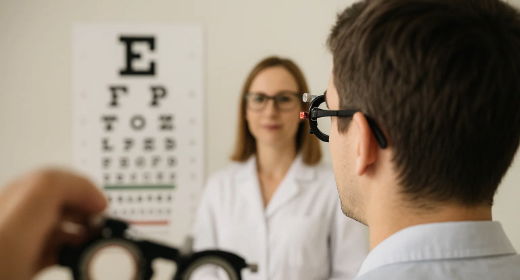
Low vision means reduced sight that cannot be fully corrected with ordinary glasses, contact lenses, medicine or surgery.
It is often caused by macular degeneration, diabetic eye disease, glaucoma or other long-term conditions. It can make reading, recognising faces, watching TV or moving around harder.
A low vision assessment looks at how you use your remaining vision and finds tools, techniques and changes at home that help you stay independent.
At a glance
A low vision assessment can help if you find it hard to:
Newspapers, labels or the Quran feel too small.
Familiar faces are hard to see clearly.
Even sitting close does not help.
Steps and kerbs are hard to see.
Text on devices is difficult to read.
Bright light makes vision worse.
Book a low vision assessment when your eye condition is stable but your vision still makes daily tasks difficult, even with your best glasses.
Low vision aids do not damage your eyes. Using your remaining sight with the right tools is safe and encouraged.
An assessment is helpful if you
 Optometrist
Shabeena Rasheed
Meet the team
Try different magnifiers to find what works for you.
High-power reading glasses and glare filters.
Simple changes at home that make a big difference.
Unhurried assessment by our optometrists.
We ask which tasks are hardest for you.
Detailed tests of distance, near and contrast vision.
You try magnifiers, glasses and lighting options in the clinic.
We recommend aids and advice, and plan a review.
Practise with your aids a little each day.
We check how the aids are working and adjust them.
Reassess as your needs or vision change.
Do
Avoid
They do not cure the eye condition, but they help you use the vision you have more easily.
Yes. Aids are often used together with your normal glasses.
Yes, please bring someone. They can learn how to help you use the aids.
Most are simple. We show you how to use them and practise with you in the clinic.
Our optometrists will help you find the aids and advice that suit your daily life.
Sunday to Friday · 9 am – 1 pm, 4 pm – 9 pm