
Looking for alternatives to glasses or contact lenses? LASIK and other refractive procedures may help correct certain vision problems, including nearsightedness, farsightedness and astigmatism.
At Majan Eye Centre in Barka, Oman, contact our team to enquire about refractive eye care, suitability assessments and available vision correction options.
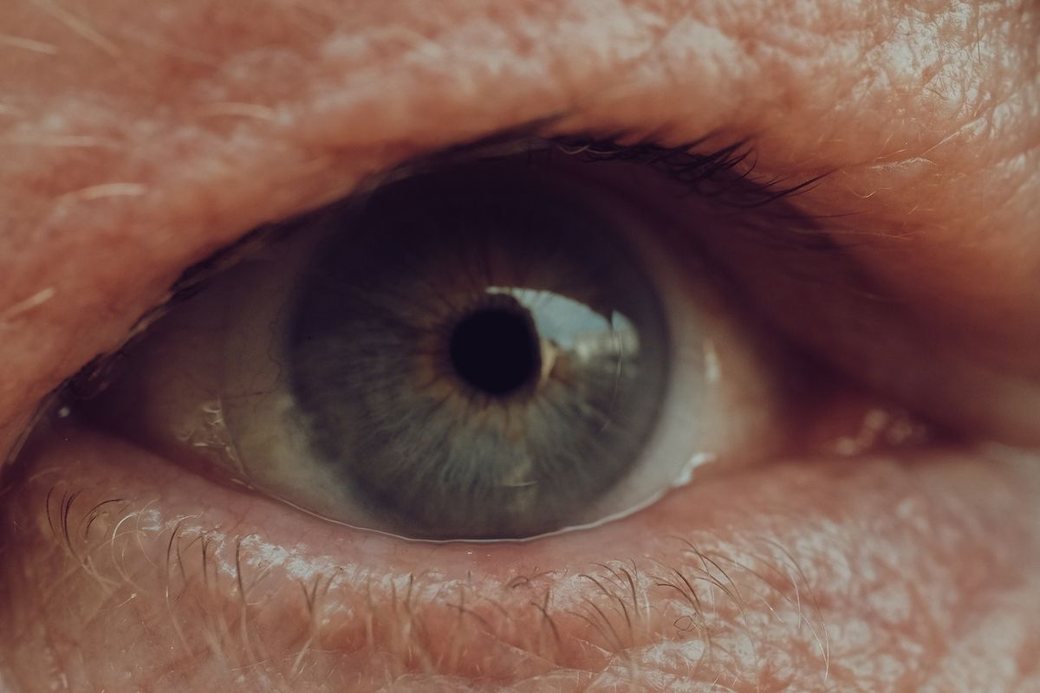 The cornea
Reshaped by laser to focus light
LASIK (Laser-Assisted In Situ Keratomileusis) is a type of refractive surgery that reshapes the cornea to help focus light correctly on the retina. It is commonly used to correct certain refractive errors, reducing dependence on glasses or contact lenses.
Other vision correction procedures may be suitable for some patients, depending on their eye health, prescription and corneal characteristics.
LASIK is not suitable for everyone. A detailed eye examination is needed to determine whether the procedure is an appropriate option.
LASIK may be used to correct certain refractive errors, including:
Difficulty seeing distant objects clearly.
Difficulty focusing on nearby objects, and sometimes distant objects.
Blurred or distorted vision caused by irregular curvature of the cornea or lens.
The degree of correction possible depends on the individual’s prescription and eye health. LASIK does not treat every cause of blurred vision or eliminate the need for reading glasses in all patients.
A suitability assessment is essential before considering refractive surgery.
LASIK may not be appropriate for people with certain corneal conditions, unstable prescriptions, significant dry eye or some other eye diseases. Pregnancy and breastfeeding can also affect prescription stability.
Your eye specialist will assess your individual circumstances and discuss the benefits, limitations and alternatives.
You may be considered for LASIK if:
Majan Eye Centre in Barka, Oman, provides eye-care consultations for patients enquiring about vision correction.
A consultation can help establish your vision needs and whether further assessment for refractive surgery is appropriate. Your specialist can explain the options available based on your prescription and eye health.
Your eye-care professional reviews your vision concerns, prescription, medical history and expectations.
A comprehensive assessment may include prescription measurements, corneal mapping, corneal thickness evaluation, tear-film assessment and examination of overall eye health. The exact tests depend on the patient’s circumstances and the procedure being considered.
The specialist explains whether LASIK or another vision correction option may be appropriate. If surgery is not suitable, glasses, contact lenses or other alternatives may be discussed.
When LASIK is recommended, the procedure uses a laser to reshape the cornea. The specific technique and arrangements depend on the treating facility and clinical plan.
Follow-up examinations help monitor healing and visual recovery. Patients should follow all prescribed instructions and attend their scheduled reviews.
Recovery varies between individuals. Some patients notice improved vision relatively quickly, but visual clarity may fluctuate while the eyes heal.
Contact the treating eye-care team promptly if you experience severe pain, sudden deterioration in vision or other unexpected symptoms after surgery.
After refractive surgery, patients should:
No. Numbing drops are used, so most people feel only light pressure. The eyes may feel gritty or scratchy for a few hours afterwards.
The laser treatment itself takes only minutes per eye. Including preparation and rest, plan to spend a few hours at the centre.
Often yes, but your ophthalmologist will decide what is best for you after your assessment.
Most people no longer need glasses for distance. Reading glasses may still be needed later in life, as the eye's focusing naturally changes with age.
The reshaping of the cornea is permanent, but the eye can still change naturally over the years, for example with age or cataracts.
Many people return to work within a few days. Please don't drive until your doctor confirms your vision meets the driving standard.
Book a LASIK assessment with our ophthalmologists. We'll check whether laser vision correction is suitable for you and explain your options.
Sunday to Friday · 9 am – 1 pm, 4 pm – 9 pm